Thank you for writing to us. One of our executive will reach back to you through your submitted medium. In case there’s an urgency, feel free to connect over WhatsApp for faster response.
Prefer calling? Dial +918048036498 (International callers) or 08048036498 (Indian callers).
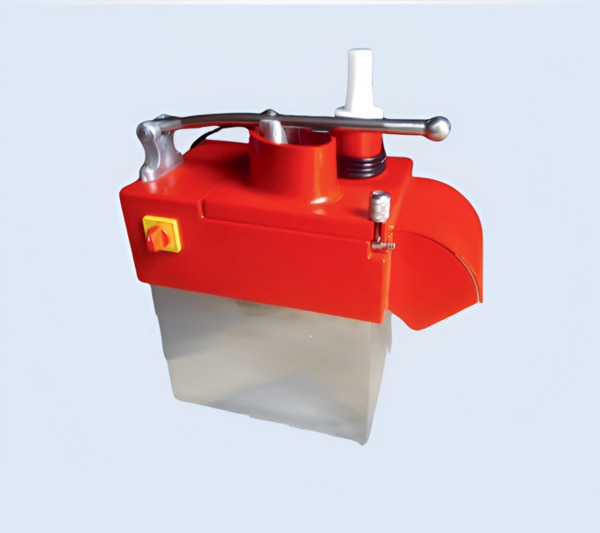
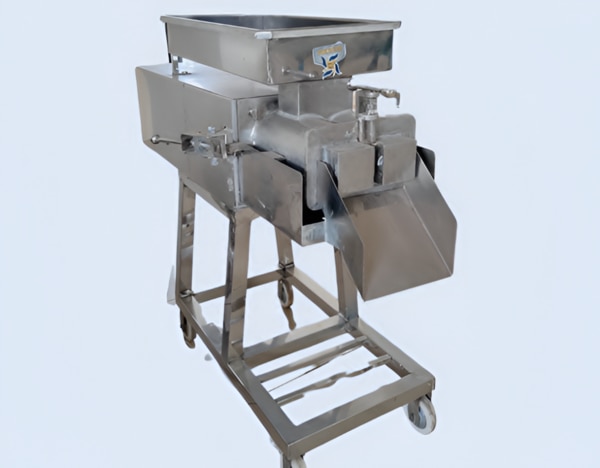
It is used for automatic cutting, slicing, dicing, or chopping of vegetables — making food prep much faster, easier, and more uniform compared to manual cutting. What is the capacity and power input of this machine? This model comes with a 1 HP motor and offers a cutting capacity of approximately 150–200 kg per hour.
MODEL MOTOR CAPACITY
REGULAR 1HP 200KG/HR
DELUXE 2HP 500KG/HR
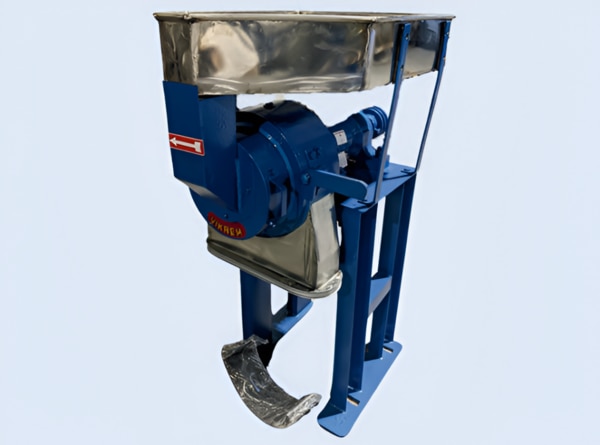
A Chilli Grinding Machine pulverizes dried red chillies into fine powder using high-speed blades or cutters, featuring robust stainless-steel construction, powerful motors, and systems (like cyclones or screens) to separate fine powder from coarser particles, offering efficiency and consistency for both home and industrial spice production. These machines are versatile, durable, and essential for creating quality chilli powder, with models ranging from small-scale to heavy-duty industrial units.
Key Components & How It Works
Feed Hopper: Where dried chillies are loaded.
Grinding Chamber: Contains fast-spinning blades or hammers that crush the chillies.
Screen/Sieve: Filters the ground material, allowing fine powder to pass while returning larger pieces for re-grinding.
Blower/Cyclone: Uses airflow to separate the fine powder from the grinding chamber and collect it, often in a dust collector.
Motor: Provides the power for grinding, with options from 3 HP for smaller units to higher HP for industrial needs.
Features & Benefits
Efficiency: Processes large volumes quickly, ideal for commercial use.
Consistency: Produces uniform, fine powder, enhancing flavor release.
Versatility: Can grind other spices (turmeric, masala) and offers adjustable coarseness.
Durability: Built from high-grade stainless steel for hygiene and longevity.
Hygienic: Systems minimize dust, ensuring clean operation.
Types of Machines
Home/Small Scale: Compact models (e.g., 3 HP) for personal or small business use.
Industrial/Commercial: Heavy-duty machines with higher capacity (e.g., 250 Kg/hr+) for large-scale spice processing plants.
Applications
Producing red chilli powder for culinary use, curries, and masalas.
Processing various other spices like turmeric and masala mixes.
MODEL MOTOR CAPACITY
MIXER 2HP 12KG/HR
MIXER 3HP 18KG/HR
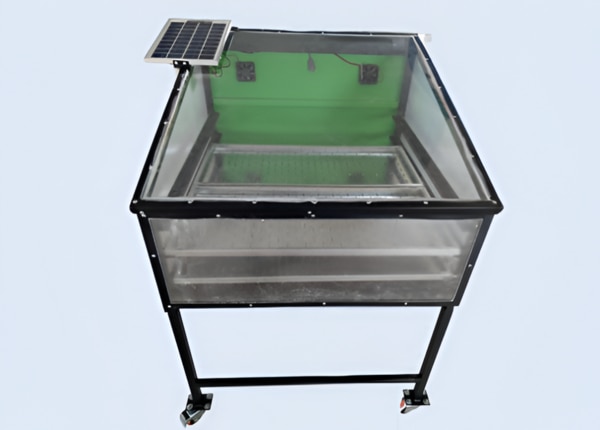
A Solar Tray Dryer Machine uses the sun's energy to heat air, which then circulates through trays holding food, evaporating moisture for preservation, featuring a collector, drying chamber with trays, and ventilation, offering contamination protection, controlled drying, and fuel-free operation, with designs ranging from simple box types to advanced hybrid systems using fans and batteries for consistent drying.
Working Principle
Energy Capture: A dark absorber plate or chamber heats up from solar radiation.
Air Heating: Air enters the collector, gets heated, and rises due to convection.
Moisture Removal: Warm air flows over trays of sliced fruits, vegetables, or spices, picking up moisture.
Humid Air Exhaust: Humid air exits through vents or exhaust fans, while fresh, dry air enters, creating continuous airflow.
Key Components & Types
Direct Dryers: Food is placed in a box with a transparent lid, using the greenhouse effect for heating (e.g., simple box dryers).
Indirect Dryers (Distributed): Separate solar collector heats air, which is then blown into the drying chamber, better for sensitive foods.
Components: Solar collector, insulated drying chamber, trays (often mesh/screen), transparent cover (glass/plastic), vents, and sometimes fans/batteries.
Benefits
Contamination-Free: Protects food from dust, insects, and animals, unlike open-air drying.
Controlled Environment: Provides consistent temperatures (50-80°C) for faster, more uniform drying.
Cost-Effective: Uses free solar energy, eliminating fuel costs.
Versatile: Dries various produce like fruits, vegetables, herbs, spices, and fish.
Modern Features
Hybrid Systems: Combine solar with biomass/fossil fuels for cloudy days.
Forced Convection: Use solar-powered fans for enhanced airflow.
Battery Backup: Solar panels can power fans and lights for continuous operation.
MODEL CAPACITY
25KG 25KG
50KG 50KG
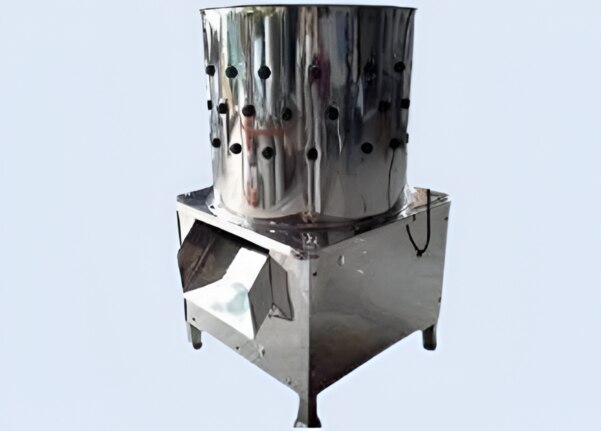
A chicken cleaning machine, or plucker, uses rotating rubber fingers inside a drum to quickly and efficiently remove feathers from poultry after scalding, featuring stainless steel construction, powerful motors (0.5-2 HP), varying bird capacities (3-10+), and automatic or semi-automatic operation for industrial or small farm use, ensuring cleaner birds with less manual effort and higher hygiene.
Key Components & Features:
Body: High-grade stainless steel for durability and easy cleaning, with some models using mild steel.
Plucking Mechanism: Soft, flexible rubber fingers (fingers) attached to a rotating drum that gently but firmly pull feathers off the birds.
Motor: Varies in power (e.g., 0.5 HP, 1 HP, 2 HP) and runs on single-phase electricity (e.g., 220-240V) for efficient rotation.
Capacity: Can handle 3, 5, 8, or up to 10+ chickens per batch, depending on the model size.
Operation: Often fully automatic, requiring minimal manual intervention, with some offering semi-automatic controls and PLC (Programmable Logic Controller) for precision.
Efficiency: Cleans birds in seconds to minutes, significantly faster than manual plucking, reducing labor.
Hygiene: Stainless steel construction and efficient cleaning leave fewer pinfeathers and maintain high hygiene standards.
How it Works:
Scalding (Pre-step): Birds are first immersed in hot water to loosen feathers.
Loading: Scalded birds are placed into the machine's drum.
Plucking: The motor activates the drum, and the rubber fingers spin, vigorously rubbing against the birds and pulling off feathers.
Rinsing/Ejection: Water is often sprayed during the process, and feathers are ejected, leaving clean birds ready for further processing.
MODEL MOTOR CAPACITY
3LIGHT 0.5HP 3 CHICKEN
3HEAVY 0.5HP 3 CHICKEN
5LIGHT 1HP 5 CHICKEN
5HEAVY 1.5HP 5 CHICKEN
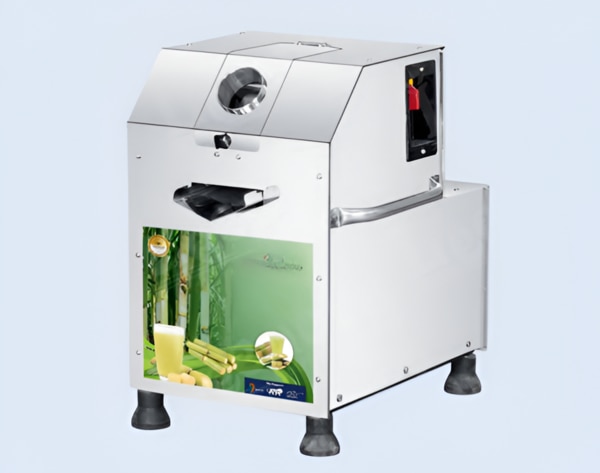
Once inside the machine, the cane is passed through a series of heavy-duty stainless steel rollers. These rollers are the heart of the machine, designed to crush the sugarcane stalks with immense pressure. As the cane is pressed, the juice is squeezed out while the fibrous residue (called bagasse) is separated
MODEL MOTOR CAPACITY
PREMIUM 1.5HP 2OOGLASS/HR
A pulp juice machine, or fruit pulper, is an appliance designed to separate the soft flesh (pulp and juice) of fruits and vegetables from the seeds, stones, and peel. These machines are used in both domestic and commercial settings, from home kitchens to large-scale industrial food processing plants.
Key Features & Details
Function: The primary function is the automatic separation of pulp/juice from unwanted residues (seeds, skin, core).
Mechanism: Most fruit pulpers use a high-speed rotating scraper or beating bar within a drum or sieve. Centrifugal force pushes the pulp and juice through the fine mesh screen, while the larger waste is expelled through a separate outlet.
Materials: Machines, particularly those in commercial use, are typically constructed from food-grade stainless steel (SS 304) to ensure hygiene, prevent rust/corrosion, and ensure durability.
Versatility: By adjusting the screen size (sieve hole diameter) or the rotor angle, operators can control the fineness and consistency of the pulp, making the machine suitable for a variety of products like juices, purees, jams, sauces, and baby food.
Types:
Single-Drum: A single drum processes the fruit, requiring part changes to switch between destoning and pulping functions.
Double-Drum: These have two consecutive drums; the first can be for destoning, and the second for pulping and peeling, making the process faster and more efficient for specific fruits like mangoes.
Automation Levels: Options range from manual hand-operated machines to semi-automatic and fully automated industrial lines that include washing, cutting, and de-seeding.
Applications
Pulp juice machines are vital in the food and beverage industry for producing a wide range of items:
Juices and Beverages: Extracting high-quality, consistent fruit juices, nectars, and concentrates (e.g., from mango, pineapple, citrus, strawberry, kiwi).
Purees and Sauces: Creating bases for jams, ketchup (from tomatoes), sauces, and baby food.
Other Industries: The extracted natural fruit pulps are also used as ingredients for flavoring dairy products (yogurts, ice creams) and in the cosmetics and pharmaceutical industries.
Benefits
Efficiency: Maximizes the yield of pulp from raw materials with minimal waste.
Hygiene: Stainless steel construction and easy-to-clean designs (sometimes with built-in Clean-in-Place (CIP) systems) ensure food safety standards are met.
Nutrient Preservation: Operating in a closed state or using a cold-press method can reduce oxidation and preserve the taste and nutritional value of the raw ingredients.
MODEL MOTOR
JUICER 0.5HP
Automatic Rice Washer Machine 25 kg CommercialA rice washer machine automates and speeds up cleaning large quantities of rice or grains, using pressurized water or gentle agitation to remove starch and debris, resulting in cleaner, fluffier rice; these machines vary from semi-automatic models for smaller kitchens to fully automated systems that wash, rinse, and even add cooking water, saving significant labor and time in commercial settings.
How They Work (General Principles)
Loading: Grains (rice, lentils) are manually loaded into the machine's basin.
Washing Cycle: Water is introduced, and the machine uses:
Water Pressure: Circulates water to rinse grains thoroughly.
Agitation: A motor creates gentle movement, mimicking handwashing but more efficiently.
Draining: Starchy, dirty water is automatically drained away.
Rinsing: Multiple wash cycles occur, often with automated water refilling.
Automated Functions (Advanced Models): Some machines can automatically add the precise amount of water needed for cooking, integrating with rice cookers.
Key Features & Benefits
Efficiency: Washes large batches (e.g., 25-50 kg) in minutes, much faster than manual washing.
Hygiene: More sanitary for large-scale food preparation.
Water & Energy Saving: Optimized water usage and lower operating costs.
Material: Typically made of stainless steel (SS 304, SS 202) for durability.
Automation: Range from semi-automatic (requiring manual loading) to fully automated systems.
Types
Commercial/Industrial: High capacity, fast, designed for restaurants, caterers, or food processing.
Home/Compact: Smaller, simpler versions for household use, though less common than commercial models.
Applications
Rice, dal (lentils), beans, and other grains.
In essence, a rice washer is a kitchen appliance that replaces time-consuming manual rice rinsing with a fast, consistent, and hygienic automated process, crucial for high-volume cooking operations.
MODEL MOTOR CAPACITY
25KG 1HP 25KG/BATCH
50KG 1.5HP 50KG/BATCH
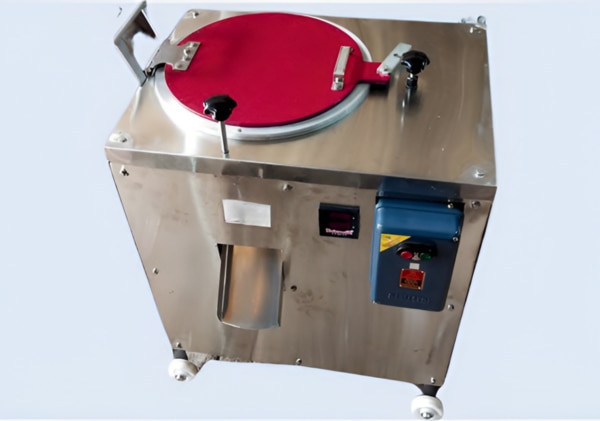
“Front load chilli machine” is not a standard industry term; the machines are generally known as chilli grinding machines, chilli cutter machines, or pulverizers. These machines are used to process fresh or dried chillies into powder, flakes, or smaller pieces. They typically feature a hopper where the chillies are loaded, which can be described as the “front load” mechanism.
Key Details and Features
Operation Mode: Available in manual, semi-automatic, and fully automatic configurations, with automatic models being ideal for high-volume commercial operations.
Material: Most commercial and industrial machines are constructed from stainless steel (e.g., SS304) to ensure hygiene, durability, and corrosion resistance, especially the parts that contact the food.
Motor Power: Power options range widely from 1 HP for small-scale/domestic use to 100 HP for large industrial plants, accommodating various production needs.
Capacity: Production capacity varies significantly by model, from small domestic units processing 10-20 kg/hr to large industrial machines capable of over 1 ton/hr.
Mechanism: Grinding typically involves a balanced beater or cutter mechanism within a chamber. Some pulverizer designs incorporate a blower system and a cyclone separator to efficiently collect the ground powder and separate dust.
Fineness Control: Many models come with a set of interchangeable screens or sieves, allowing the user to adjust the output texture from coarse flakes to a fine powder.
Power Source: Machines can be designed for single-phase (typically 220V-240V) or three-phase (typically 415V-440V) electricity, making them adaptable to different electrical standards.
Applications: Primarily used for grinding dry chillies, these versatile machines are also suitable for processing other dry spices like coriander, cumin, turmeric, and various herbs.
Operation and Maintenance
Process: Chillies are loaded into a feeding hopper, and the machine automatically cuts or grinds them. In large plants, this can be part of a multi-stage process including washing, sorting, and grading.
Efficiency: Modern machines prioritize energy efficiency and often feature low-temperature grinding technology to retain the natural color and aroma of the chillies.
Safety and Maintenance: Features often include an AMP meter for load monitoring, safety mechanisms, and easy-to-clean components. Routine maintenance involves cleaning the sieves and checking for wear on parts like blades.
MODEL MOTOR CAPACITY
12D 7.5HP 25KG/HR
12D BOX 7.5HP 25KG/HR
14D 10HP 30KG/HR
16D 15HP 50KG/HR
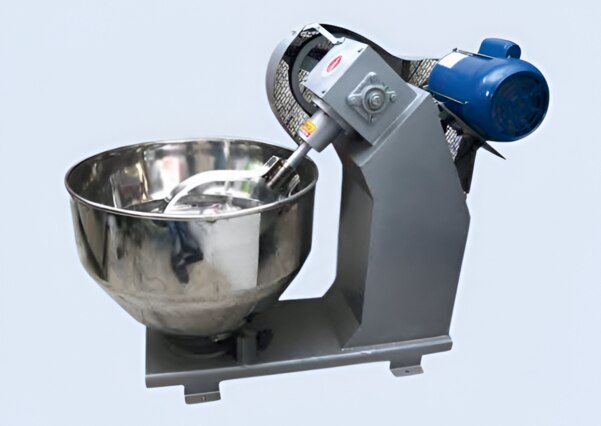
An atta kneader machine is an electric-powered kitchen appliance that automates the process of mixing flour, water, and other ingredients into smooth, consistent dough, saving significant time and effort compared to manual kneading.
Key Details and Features
Operation: The user adds the required ingredients (flour, water, oil, salt, etc.) into the mixing bowl. The machine's internal motor powers a kneading blade or arm that rotates to fold, stretch, and mix the dough until it reaches the desired consistency.
Capacity: Machines are available in a wide range of capacities, from compact domestic models (2-5 kg per batch) to large commercial units (up to 50 kg or more per batch), catering to various needs from home cooking to industrial food production.
Material: Most models feature a food-grade stainless steel bowl and mixing components to ensure durability, hygiene, and resistance to rust. The outer body may be stainless steel or coated metal.
Automation: Both semi-automatic and fully automatic options exist. Automatic models often include pre-set programs and timers, allowing for a hands-free operation after adding ingredients.
Power: They typically run on electric power, with wattage and horsepower (HP) varying based on capacity, ranging from 550W for home use to several HP for commercial applications.
Safety Features: Common safety features include a lockable lid to prevent operation while open, overload protection to prevent motor damage, and non-slip pads for stability.
Benefits
Time and Effort Saving: Automates the laborious task of manual kneading, which is especially beneficial for large quantities.
Consistent Results: Ensures uniform mixing and consistent dough quality (smooth and elastic texture) in every batch, crucial for perfect rotis, chapatis, puris, bread, and other items.
Hygienic: Minimizes manual handling of the dough, contributing to a cleaner and more hygienic preparation process.
Versatility: Can be used for a wide variety of dough types, including those for bread, pizza, pastries, and different flours like atta, maida, and besan.
Usage
To operate, one typically follows these general steps:
Place the kneading blade inside the bowl.
Add flour and other dry ingredients.
Add the appropriate amount of water (often a ratio of approximately two parts flour to one part water, which may need slight adjustment).
Secure the lid and select the desired program or set the timer.
Once the machine stops, the ready dough can be removed. The bowl is often tiltable in commercial models for easy removal.
MODEL MOTOR CAPACITY
5KG 0.5HP 5KG/BATCH
10KG 1HP 10KG/BATCH
15KG 1.5HP 15KG/BATCH
20KG 2HP 20KG/BATCH
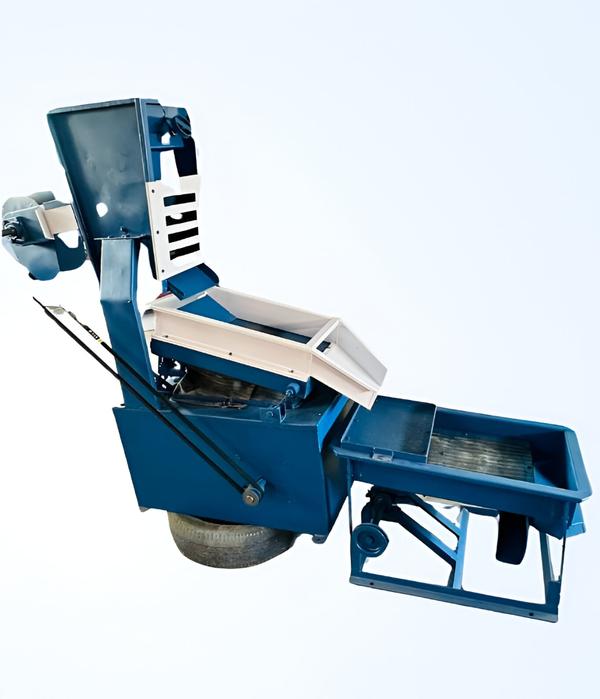
Working Principle and Process Effect Analysis of Stone ...A destoner machine separates heavy impurities like stones, metal, and dirt from lighter products (grains, seeds, nuts) using density, vibration, and air flow, ensuring cleaner food products by moving heavier items uphill on vibrating screens while lighter items are discharged separately, preventing damage to processing equipment. These machines are essential in food processing, featuring adjustable screens, air blowers, and sometimes magnets, with types including gravity, vibratory, and suction, crucial for quality control in milling operations.
How it works
Feeding: Raw material enters the machine, usually via a hopper, and is distributed onto a vibrating, inclined screen deck.
Air Flow: A blower pushes air upwards through the mesh screen, creating a “fluidized bed”.
Separation:
Lighter products (grains, seeds) are lifted by the air and move to the top or a separate outlet.
Heavier impurities (stones, metal) sink to the bottom of the screen.
Vibration: The deck's vibration moves the heavier materials uphill towards their own outlet, while the clean, lighter product flows to another.
Key components
Vibrating Decks/Screens: Often multiple decks with mesh for separation.
Blower/Fan: Generates the necessary airflow.
Air Recycling System: Recirculates air for efficiency, with optional dust collectors (cyclones).
Motors/Pulleys: Drive the vibration.
Outlets: Separate channels for clean product and heavy impurities.
Types
Gravity Destoners: Rely on density and air currents.
Vibratory Destoners: Add precise vibration for better control.
Suction-Type Destoners: Use strong suction fans.
Magnetic Destoners: Incorporate magnets to capture ferrous metals.
Applications
Grains & Cereals: Rice, wheat, corn, barley.
Pulses & Seeds: Beans, sunflower seeds, oil seeds.
Spices & Flours: Removing contaminants before final processing.
Vegetables: Potatoes, carrots.
MODEL SHAKER MOTOR PRODUTION
1/4 TON 2.5'X1.25' 2HP 250KG/HR
1/2 TON 4'X2' 3HP 500KG/HR
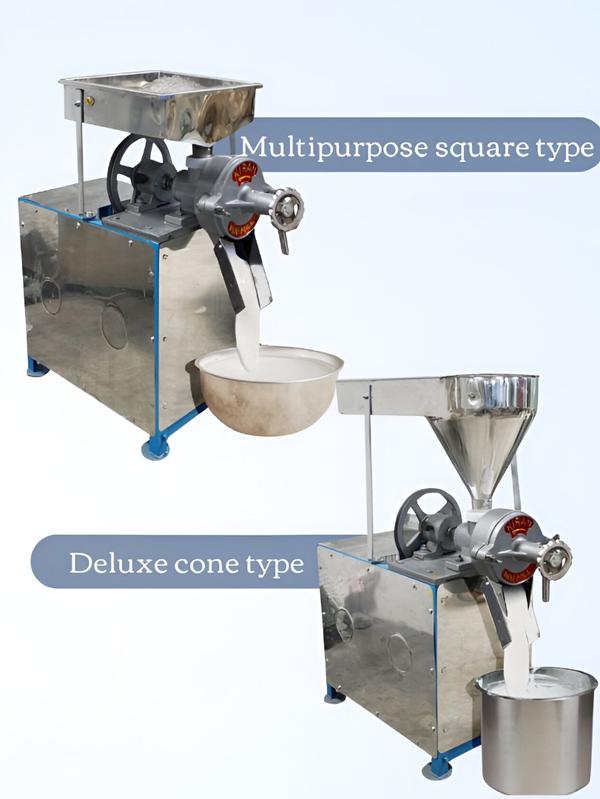
An Instant Rice Grinder Machine is a commercial-grade, electric appliance for rapidly grinding rice and other grains into flour or batter for dishes like dosa/idli, featuring durable stainless steel construction, automatic or semi-automatic operation, and a compact design ideal for hotels, restaurants, and large kitchens needing quick, consistent, high-volume rice processing with enhanced hygiene and efficiency.
Key Features & Components
Material: Primarily constructed from stainless steel for durability, easy cleaning, and corrosion resistance.
Operation: Electric-powered, offering quick and efficient grinding, often with automatic controls.
Capacity: Varies by model, but generally designed for high output (e.g., 10-50 kg/hr or more).
Motor: Typically uses robust motors (e.g., 1 HP, 2 HP) for heavy-duty tasks.
Grinding Mechanism: Uses blades or stones to achieve fine consistency, sometimes with adjustable settings.
Design: Available in table-top or floor-standing models, often with a compact, sleek design for space-saving.
Control: Features manual or semi-automatic controls for ease of use.
How it Works
Load: Washed rice (or other grains) is placed into the stainless steel container.
Power On: The machine is switched on.
Grind: The motor rapidly grinds the rice to the desired fineness.
Collect: The resulting rice flour or batter is collected from the output.
Ideal Applications
Hospitality: Hotels, restaurants, catering businesses, and large kitchens.
Food Processing: Businesses preparing large quantities of rice-based products (idli, dosa batter, etc.).
Benefits
Speed & Efficiency: Significantly reduces preparation time for large batches.
Hygiene: Stainless steel build ensures hygienic processing.
Consistency: Delivers uniform results for consistent food quality.
Space-Saving: Compact designs fit well in busy commercial kitchens.
MODEL MOTOR PRODUCTION
7'' 2HP 40KG/HR
8'' 2-3HP 60KG/HR
10'' 3-5HP 100KG/HR
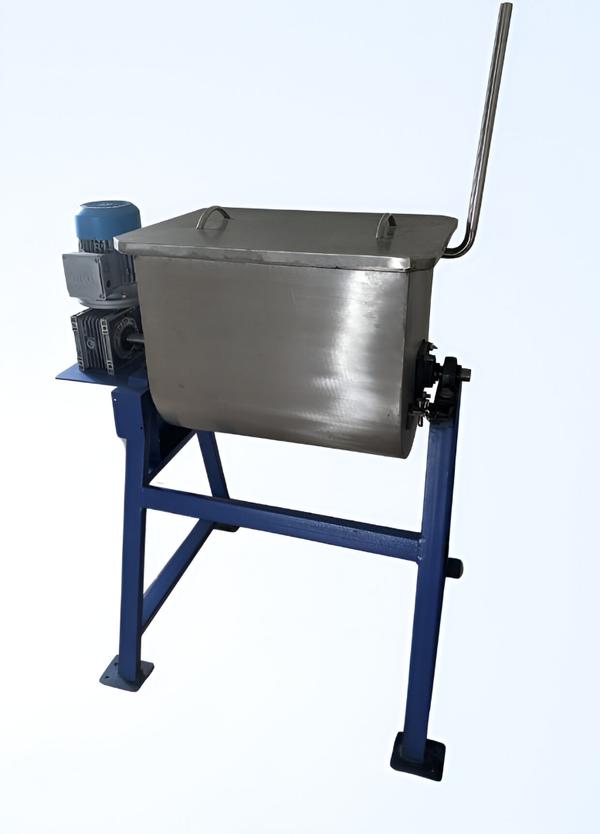
A Ribbon Blender is a robust industrial mixer featuring a U-shaped trough with a horizontal shaft and double helical ribbons, ideal for uniformly blending dry powders, granules, and pastes in food, pharma, and chemical industries. The inner and outer ribbons move materials in opposite directions, creating convective mixing, ensuring thorough blending in typically 5-15 minutes with gentle action that preserves particle integrity. Key features include stainless steel construction, easy cleaning, customizable options like heating/cooling, and efficient discharge valves, making it versatile and cost-effective for solids-to-solids or solids-to-liquids mixing.
Key Components
U-Shaped Trough: The main vessel where mixing occurs, often stainless steel.
Double Helical Ribbons: Inner and outer spiral blades that rotate to move materials.
Horizontal Shaft: Rotates the ribbons, driven by a motor and gearbox.
Discharge Valve: Located at the bottom for material removal, with options like butterfly or spherical valves.
Working Principle
Loading: Materials (powders, granules, liquids) are loaded into the trough, typically filling about two-thirds of the volume.
Mixing: The motor turns the shaft, causing the ribbons to agitate the mixture. The inner ribbon moves material outward, while the outer ribbon pushes it inward, creating a gentle yet thorough back-and-forth blending.
Discharge: Once mixed (often 5-15 mins), the material is discharged through the valve.
Applications & Advantages
Applications: Spices, flour, detergents, pharmaceuticals (tablet powders), fertilizers, cosmetics, instant mixes.
Solids & Liquids: Excellent for dry powder blending and incorporating small amounts of liquids.
Gentle Action: Low speed prevents particle breakage, ideal for heat-sensitive or fragile materials.
Cost-Effective: Durable, low maintenance, and offers good performance for many applications.
Key Features
Material: Heavy-gauge Stainless Steel (SS304, SS316).
Hygiene: Sanitary design with external bearings to prevent contamination.
Customization: Can include heating/cooling jackets, vacuum systems, and PLC controls.
MODEL MOTOR PRODUCTION
25KG 1HP 25KG/BATCH
50KG 2HP 50KG/BATCH
100KG 3HP 100KG/BATCH